
Stop the Bleed on the Trail: Three Minutes to Keep Your Buddy Alive
Beacon Medical Preparedness | Week 1
You're winching your buddy's Jeep over a granite slab on the Rubicon. The cable snaps. The hook catches his thigh. Blood is soaking his cargo shorts in seconds. You're 45 minutes from the nearest paved road. In three minutes, he could be gone. What you do next depends on what you practiced last weekend.
I've been that guy standing in the dirt, adrenaline screaming through my veins, hands shaking while someone I care about bleeds in front of me. It was a chainsaw kickback at a remote cabin site - not a winch cable, but the same math applied. Three to five minutes. That's the arterial bleed window. That's how long you have before the body loses enough blood to shut down permanently.
Urban Stop the Bleed training is valuable, but it operates on a dangerous assumption: that EMS is eight minutes away. In the backcountry, the math is brutal and unforgiving.
The Reality Check: Urban vs. Wilderness Response Times
According to JAMA Surgery's analysis of 1.7 million EMS encounters, the average urban response time is about seven minutes. Suburban areas average six minutes. But rural areas? The median jumps to 13 minutes, with nearly one in ten rural 911 calls resulting in waits of nearly 30 minutes.
Washington State EMS standards tell the story even more starkly. For wilderness response areas, the official standard is "as soon as possible." That's bureaucratic speak for "we have no idea when we'll get there."
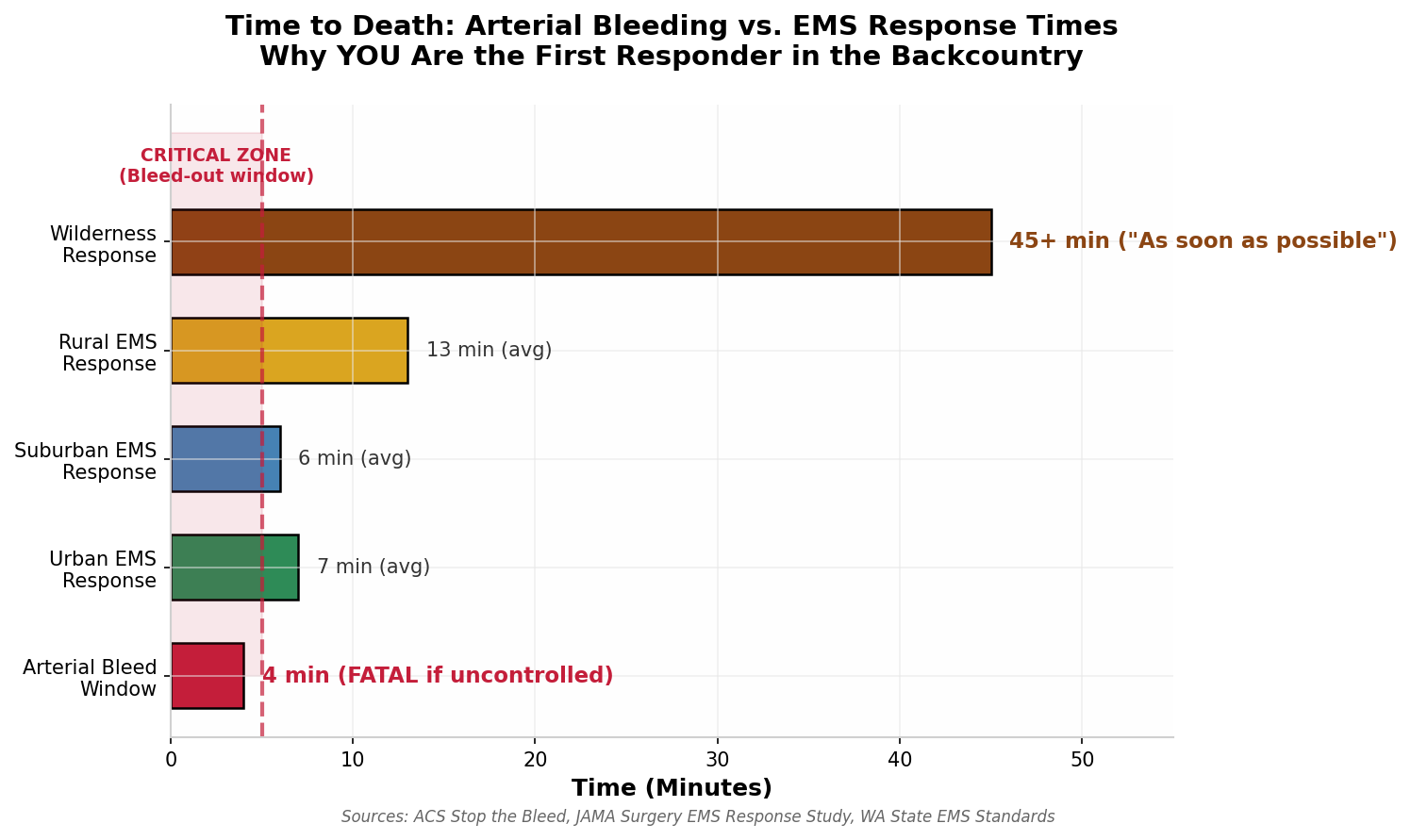
Figure 1: The critical disconnect between arterial bleeding time and EMS response
The Committee on Tactical Combat Casualty Care reports that a person can bleed to death from a significant arterial injury in 3-5 minutes. The femoral artery in your thigh can pump out a liter of blood per minute under stress. Do that for three minutes, and you've lost 60% of your blood volume. Game over.
This is why the American College of Surgeons Stop the Bleed campaign exists - because bystanders are the true first responders. In the wilderness, you are the only responder for a critical window of time.
The ABCs for the Backcountry
Stop the Bleed teaches a simple framework: Alert, Bleeding, Compress. But in the wilderness, each step gets complicated by reality.
A - Alert: Communication When Cell Towers Don't Exist
Urban training says "call 911." In the backcountry, you need a satellite communicator (inReach, Spot, Zoleo) or a ham radio. If you don't have one, someone has to go for help. That decision - who stays, who goes - can be the difference between life and death.
Here's the protocol: Designate one person to manage communications. Everyone else focuses on patient care. If you're sending someone for help, they need written details - GPS coordinates, nature of injury, number of victims, what care has been provided. Adrenaline destroys memory.
B - Bleeding: Finding Wounds Through Mud and Blood
In a classroom, wounds are clean and visible. On the trail, blood mixes with dirt, mud, and water. Clothing conceals injuries. Adrenaline masks pain. You need a systematic approach:
Expose the wound: Cut or tear clothing away. Don't be gentle - modesty means nothing if someone dies.
Look for the source: Arterial bleeding is bright red and spurts with the heartbeat. Venous bleeding is darker and flows steadily.
Check everywhere: Head-to-toe assessment. Blood pooling in boots or waders. Soaking through pack straps.
C - Control: The Three Techniques That Actually Work
Stop the Bleed teaches three methods, and you need to know all three because different wounds demand different approaches.
1. Direct Pressure
Simple, effective, and often overlooked. Use both hands if you have them. Press hard - harder than you think. The bleeding won't stop with gentle pressure. If you don't have gauze, use a t-shirt, bandana, or your bare hands. Sterility is a luxury; bleeding control is mandatory.
2. Wound Packing
For deep wounds or junctional areas (groin, armpit, neck) where a tourniquet won't work, you need to pack the wound. Use hemostatic gauze if you have it - QuikClot or Celox work by accelerating clotting. If not, plain gauze or clean cloth will do.
The technique: Pack deep and tight. Use your fingers to push the material into the wound cavity until you meet resistance. Fill the entire space. Then hold pressure for at least three minutes. Don't peek. Every time you lift to check, you break the clot.
3. Tourniquet Application
For extremity bleeding - arms and legs - the tourniquet is your nuclear option. Modern windlass tourniquets (CAT, SAM-XT) are proven effective and safe when applied correctly.
Key points for outdoor application:
• Place it 2-3 inches above the wound, not over a joint - “High and Tight” is my motto here
• If there's dirt or mud, wipe what you can - grit under the tourniquet can cause tissue damage
• Tighten until the bleeding stops completely. This will hurt. A lot.
• Note the time. Write it on the tourniquet or the patient's forehead with a Sharpie.
• If one doesn't work, apply a second above it.
KIT CHECK: The Beacon Kit Pro
The Beacon Pro includes the essentials for backcountry bleeding control:
- QuikClot hemostatic gauze (3" x 4ft)
- Israeli-style pressure bandage (6")
- Windlass tourniquet (Sam-XT)
- Nitrile gloves (2 pairs)
- Trauma shears
- Permanent marker
-Rolled gauze
-4×4 guaze
SKILL TO PRACTICE: Apply the tourniquet to your own thigh, one-handed, while blindfolded. Simulate the stress and limited visibility of a real emergency. Time yourself. Under 60 seconds is the goal.
The Outdoor Realities: When Conditions Fight Back
Classroom training happens on clean floors with good lighting. The trail offers none of these advantages.
Cold Weather Complications
Hypothermia and bleeding are a deadly combination. Cold blood doesn't clot well. If the patient is shivering, their clotting cascade is already compromised. You need to get them warm while controlling bleeding - a difficult balance when you need to expose the wound.
Solution: Work fast. Use a space blanket or tarp to create a micro-environment. Once bleeding is controlled, prioritize warmth.
Water and Blood Don't Mix
If the injury happens in or near water - a common scenario for boaters, kayakers, and river crossers - you're fighting physics. Water washes away clotting factors and dilutes blood.
Solution: Get out of the water first if possible. If not, direct pressure becomes even more critical because clotting won't happen naturally.
The Group Dynamic
In a group emergency, people freeze or panic. Someone needs to take command. That someone might be you.
Be direct. Assign specific tasks: "You, call for help. You, hold pressure here. You, get the sleeping bags for warmth." Specific instructions break paralysis.
The Practice Challenge: Don't Let Today Be Your First Time
Reading this article is not training. Watching a video is not training. You need muscle memory, and that only comes from repetition under stress.
Here's your homework for this week:
Baseline test: Time yourself applying a tourniquet to your own leg, one-handed. Record the time.
Add stress: Do 20 burpees to elevate your heart rate, then apply the tourniquet. Record the time.
Add environmental stress: Wet your hands and the tourniquet. Apply it in low light or blindfolded.
Practice wound packing: Use a piece of meat from the grocery store (chicken thighs work well). Practice packing gauze into a deep wound. Feel what resistance means.
The goal isn't perfection. It's familiarity. When your buddy's blood is on your hands, you don't want to be reading instructions.
Sources & References
American College of Surgeons Stop the Bleed Campaign. "ABC's of Bleeding Control." https://www.stopthebleed.org
Committee on Tactical Combat Casualty Care. Hemorrhage control guidelines and arterial bleed timeframes.
Mell, H. et al. (2017). "Emergency Medical Service Response Times in Rural, Suburban and Urban Areas." JAMA Surgery.
Washington State WAC 246-976-390: Standards for trauma verified prehospital EMS services.
American College of Surgeons Clinical Congress (2025). "EMS Call Times in Rural Areas."
NOLS Wilderness Medicine Institute. Backcountry bleeding control protocols.